Ridgid Manual Pipe Threader: A Comprehensive Guide (Updated 04/07/2026)
Ridgid manual pipe threaders, including models 535, 300, 141, and 400A, are essential tools for creating precise pipe threads for plumbing and piping systems.
What is a Ridgid Manual Pipe Threader?
A Ridgid manual pipe threader is a mechanical tool designed to cut helical threads onto the exterior of pipes, creating fittings that can be screwed together. These threaders are renowned for their durability and precision, making them a staple in plumbing, pipefitting, and various industrial applications.

Unlike powered threaders, manual models rely on the operator’s force to drive the cutting dies, offering greater control, especially in field work. Ridgid offers a range of models – like the 300, 535, 141, and 400A – each suited for different pipe sizes and materials. They are vital for creating secure, leak-proof connections.
History of Ridgid Pipe Threaders
Ridgid’s legacy in pipe threading began in 1923 with the introduction of a revolutionary, quickly adjustable pipe wrench. This innovation paved the way for their entry into pipe threading tools. Throughout the mid-20th century, Ridgid became synonymous with robust, reliable manual pipe threaders, favored by professionals for their longevity and performance.
Models like the 300 and 141 series gained widespread recognition; Continuous improvements focused on enhancing efficiency and user-friendliness. Today, while powered options exist, Ridgid continues to manufacture manual threaders – including the 535 and 400A – maintaining their commitment to quality craftsmanship.
Common Ridgid Manual Pipe Threader Models
Ridgid offers a diverse range of manual pipe threaders, catering to various needs. The 300 Series is known for its versatility and portability, ideal for field work. The 535 Series provides increased capacity for larger diameter pipes, favored by industrial plumbers. The compact 141 Threaders are perfect for smaller jobs and tight spaces.
Finally, the heavy-duty 400A Threaders deliver exceptional power and durability for demanding applications. Surplus Record frequently lists these models, alongside nipple machines and tube cutters, demonstrating their enduring popularity and availability on the used market.
Ridgid 300 Series Threaders
The Ridgid 300 Series threading machines represent a cornerstone of portable pipe threading solutions. Highly regarded for their lightweight design and adaptability, these threaders excel in field applications where maneuverability is crucial. They efficiently handle a range of pipe sizes, making them suitable for diverse plumbing and piping projects.
Frequently found available for sale on platforms like Surplus Record, the 300 series offers a cost-effective entry point into professional pipe threading. Their robust construction ensures longevity, even with frequent use.
Ridgid 535 Series Threaders
Ridgid 535 Series threaders are known for their versatility and durability, making them a popular choice among professionals. These machines are capable of handling a wider range of pipe diameters and schedules compared to some other models, offering increased flexibility on job sites.
Often listed on sites like Surplus Record alongside nipple machines and tube cutters, the 535 series provides a robust solution for demanding threading tasks. Their solid build ensures reliable performance and a long service life.
Ridgid 141 Threaders
Ridgid 141 threaders represent a more compact and portable option within the Ridgid manual threading lineup. While offering a smaller footprint, they still deliver the reliable performance expected from the brand, making them suitable for jobs with limited space or requiring frequent relocation.
Frequently found available for sale used, alongside other Ridgid tools, the 141 series is a cost-effective solution for smaller-scale threading needs. They are often sought after for their simplicity and ease of use.
Ridgid 400A Threaders

Ridgid 400A threaders are known for their robust construction and ability to handle larger diameter pipes compared to some other models in the Ridgid manual series. These threaders are a popular choice for professional plumbers and pipefitters tackling demanding projects.
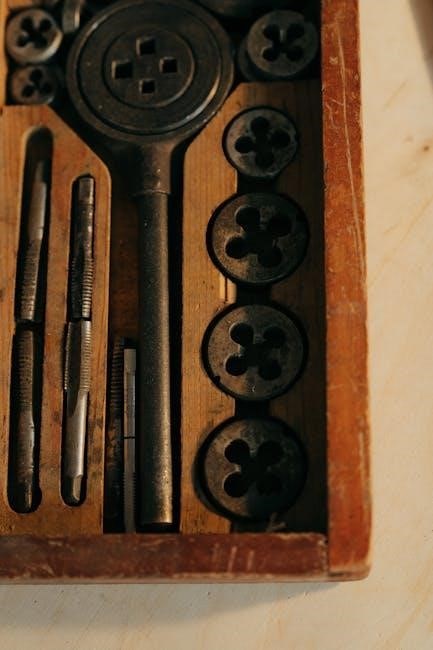
Often listed for sale alongside nipple machines and tube cutters on platforms like Surplus Record, the 400A provides a durable and dependable threading solution. They represent a significant investment, reflecting their capacity and longevity.
Pipe Threading Basics
Pipe threading is the process of creating helical threads on the exterior of a pipe to allow it to be screwed into a fitting. Understanding the nuances of this process is crucial for successful plumbing and piping installations. Two primary thread standards exist: NPT (National Pipe Thread) and BSP (British Standard Pipe).
NPT is tapered, creating a tighter seal, while BSP can be parallel. Selecting the correct die and tap, matched to the pipe material, is paramount for achieving clean, consistent threads and preventing damage.
Understanding Pipe Threads (NPT vs. BSP)
NPT (National Pipe Thread) is a tapered thread standard commonly used in North America, designed to create a pressure-tight seal through interference. Conversely, BSP (British Standard Pipe) threads can be either tapered or parallel, requiring sealant for a leak-proof connection.
Identifying the correct thread type is vital; mixing NPT and BSP can lead to leaks or damage. NPT threads become tighter as they are screwed together, while BSP parallel threads rely on a sealing ring or tape.
Die and Tap Selection for Different Materials
Selecting the correct die and tap is crucial for successful threading with a Ridgid manual pipe threader. For steel and iron pipes, high-speed steel (HSS) dies and taps are generally sufficient. However, stainless steel and harder alloys require carbide-tipped tools for durability.
Always match the die/tap size to the pipe diameter and material. Using the wrong tool can damage both the pipe and the threading equipment, resulting in poor thread quality and potential leaks.
Setting Up a Ridgid Manual Pipe Threader
Proper setup is paramount for safe and efficient operation of a Ridgid manual pipe threader. Begin by securely mounting the threader to a stable workbench or surface, ensuring it won’t move during operation. Verify the chosen dies and handles are compatible with the threader model and pipe size.
Double-check all locking mechanisms before proceeding. A wobbly or improperly secured threader can lead to inaccurate threads and potential injury.
Proper Mounting and Securing the Threader
Secure mounting is critical for safe and accurate threading. Ridgid threaders are typically designed to be bolted or clamped to a sturdy workbench. Ensure the surface can handle the force applied during operation; a lightweight table isn’t sufficient.
Inspect the mounting points on both the threader and the workbench. Tighten all bolts firmly, checking for any wobble. A stable setup minimizes vibration and ensures consistent thread quality, preventing potential accidents.
Die and Handle Installation
Correct die installation is paramount for creating accurate threads. Select the appropriate die for the desired pipe size and thread type (NPT or BSP). Carefully screw the die into the die holder, ensuring it’s properly aligned and snug – avoid over-tightening.
Next, attach the handle to the die holder. A secure connection is vital; a loose handle can lead to inconsistent threading and potential injury. Double-check all connections before commencing the threading process.
The Pipe Threading Process – Step-by-Step
Begin by securely mounting the pipe within the Ridgid threader. Initiate threading with steady, even pressure, rotating the handle smoothly. Avoid excessive force, which can damage the die or pipe. Monitor the cutting process closely, feeling for resistance or inconsistencies.
Periodically back off the die slightly to clear chips and apply threading oil. Continue rotating until the desired thread length is achieved, maintaining consistent speed and pressure throughout the entire operation.
Preparing the Pipe for Threading (Deburring, Cleaning)
Prior to threading, thoroughly deburr the pipe’s end, removing any sharp edges or internal obstructions. Utilize a reamer or deburring tool for a clean, smooth opening. Next, meticulously clean the pipe’s surface, eliminating rust, dirt, and any foreign materials.
A clean surface ensures proper die engagement and prevents contamination of the threads. Inspect the pipe for any defects; damaged pipe shouldn’t be threaded. Proper preparation is crucial for achieving high-quality, leak-proof threads.
Threading Technique: Speed and Pressure
Consistent, moderate speed is key during threading; avoid rushing or applying excessive force. Begin with light pressure, gradually increasing it as the die engages the pipe. Maintain a steady, even rotation of the handle, ensuring the die cuts uniformly around the pipe’s circumference.
Listen for a consistent cutting sound; changes indicate potential issues. Avoid stopping mid-thread, as this can create inconsistencies. Proper technique minimizes die wear and maximizes thread quality, resulting in reliable pipe connections.
Monitoring and Adjusting During Threading
Regularly inspect the chip formation – long, continuous chips indicate proper cutting, while small, fragmented chips suggest insufficient lubrication or excessive speed. Feel for resistance; increased resistance signals a need to reduce pressure or re-lubricate.
Periodically back off the die slightly to clear chips and prevent binding. Adjust the die’s position if the threading deviates from straight. Consistent monitoring and minor adjustments ensure a clean, accurate thread, preventing leaks and ensuring a secure connection.
Maintenance and Care
Consistent maintenance extends the life of your Ridgid manual pipe threader. Regularly lubricate all moving parts – the feed mechanism, handle pivots, and die head – with a quality threading oil. Inspect dies for wear and damage; reconditioning or replacement is crucial for thread quality.
After each use, thoroughly clean the threader, removing chips and debris. Store it in a dry environment to prevent rust and corrosion. Proper care ensures reliable performance and minimizes downtime;
Lubrication of Moving Parts
Regular lubrication is paramount for smooth operation and longevity of your Ridgid manual pipe threader. Apply a high-quality threading oil to all moving components, including the feed screw, handle pivot points, die head, and any gears. This reduces friction, prevents wear, and ensures efficient threading.
Focus on areas experiencing high stress. Wipe away excess oil to avoid attracting debris. Consistent lubrication minimizes effort and maximizes the tool’s lifespan, contributing to consistently clean threads.
Die Reconditioning and Replacement
Over time, threading dies will wear, impacting thread quality. Reconditioning involves carefully cleaning the die and, in some cases, lightly filing to restore the cutting edges – a task best left to professionals. However, dies have a limited lifespan.
Recognize when replacement is necessary; damaged or excessively worn dies produce inconsistent threads and can damage the pipe. Ridgid offers replacement dies readily available for various pipe sizes and materials, ensuring continued precision and efficiency.
Cleaning and Storage
Proper cleaning after each use is crucial for maintaining your Ridgid manual pipe threader. Remove all metal chips and threading oil with a suitable solvent and a stiff brush. Inspect for corrosion and address it promptly with a rust inhibitor.
For storage, apply a light coat of oil to all metal surfaces to prevent rust. Store the threader in a dry environment, ideally in its original case, protecting it from dust and physical damage.
Safety Precautions
Always wear appropriate eye protection, such as safety glasses or a face shield, when operating a Ridgid manual pipe threader to protect against flying metal chips. Gloves are also recommended to safeguard your hands from sharp edges and potential cuts during handling.
Ensure a stable and well-lit work area, free from obstructions. Securely clamp the threader to a sturdy surface before operation. Never exceed the threader’s capacity, and always disconnect power before making adjustments or repairs.
Eye Protection and Hand Safety
Protecting your eyes is paramount when using a Ridgid manual pipe threader; metal chips generated during threading pose a significant risk. Safety glasses or a full face shield are non-negotiable. Equally important is hand safety – wear durable work gloves to prevent cuts from sharp pipe ends or the threading dies themselves.
Inspect gloves for tears before each use. Avoid loose clothing or jewelry that could become entangled in the machinery. Prioritize these precautions to ensure a safe and productive threading experience.
Proper Work Area Setup
A well-organized workspace is crucial for safe and efficient operation of a Ridgid manual pipe threader. Ensure a stable, level surface capable of supporting the threader’s weight and the force applied during operation. Ample clearance around the machine prevents accidental contact and allows for comfortable movement.
Good lighting is essential for clear visibility of the threading process. Keep the area free of obstructions and ensure adequate ventilation. A designated space for tools and materials further enhances safety and workflow.
Troubleshooting Common Issues
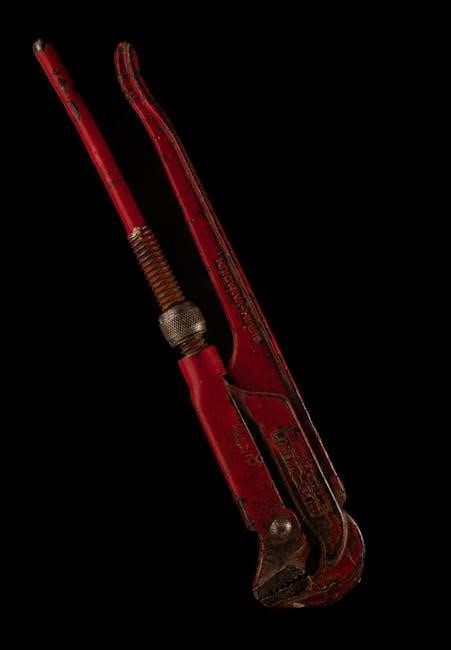
Broken dies are a frequent problem, often caused by improper setup or excessive force; inspect dies regularly for cracks. Inconsistent thread quality can stem from dull dies, incorrect speed, or insufficient lubrication – recondition or replace dies and adjust technique.
Handle slippage indicates a loose connection or worn components; tighten securely or replace parts. Always address issues promptly to prevent further damage and maintain threading accuracy. Regular maintenance minimizes these occurrences.
Broken Dies
Broken dies on a Ridgid manual pipe threader typically result from applying too much force during the threading process, or using a die that’s inappropriate for the pipe material. Improper setup, like misalignment, also contributes. Inspect dies before each use for existing cracks or wear.
When a die breaks, immediately stop and carefully remove the fragments. Replacement is crucial; attempting to use a damaged die risks further damage and unsafe threading. Proper lubrication and technique prevent breakage.
Inconsistent Thread Quality
Inconsistent thread quality with a Ridgid manual pipe threader often stems from inadequate pipe preparation – failing to deburr or clean the pipe properly. Incorrect die selection for the pipe material is another common cause, as is uneven pressure applied during threading.
Ensure the die is correctly aligned and securely fastened. Regularly check and adjust the threading speed. Poor lubrication can also lead to inconsistent results. Inspect finished threads for imperfections and re-thread if necessary.
Handle Slippage
Handle slippage on a Ridgid manual pipe threader is a frequent issue, often caused by accumulated grease or metal filings on the handle or ratchet mechanism. This reduces friction and prevents a secure grip, hindering effective threading.
Regularly clean the handle and ratchet with a degreaser. Inspect the handle for wear or damage, replacing it if necessary. Ensure the retaining pin is securely in place. Applying a light coating of threading oil can improve grip, but avoid excessive amounts.
Ridgid Manual Pipe Threader Accessories
Ridgid manual pipe threaders benefit greatly from accompanying accessories, enhancing efficiency and quality. Pipe cutters provide clean, square cuts essential for accurate threading. Reamers and deburring tools remove sharp edges and internal burrs, preventing die damage and ensuring smooth pipe connections.
Threading oil is crucial for lubrication, reducing friction and heat during the threading process, extending die life and improving thread quality. These accessories, alongside stands and vises, create a complete and professional pipe threading setup.
Pipe Cutters
Ridgid pipe cutters are indispensable accessories for manual pipe threaders, ensuring clean and square cuts vital for successful threading. Utilizing a hardened steel wheel, these cutters quickly and accurately slice through various pipe materials – steel, copper, and even some plastics.
Properly cut pipes minimize burrs and deformation, leading to better thread engagement and leak-proof joints. Ridgid offers various cutter wheel replacements and sizes, accommodating different pipe diameters and schedules, maximizing versatility and precision in your plumbing work.
Reamers and Deburring Tools
Ridgid reamers and deburring tools are crucial companions to manual pipe threaders, preparing pipe ends for optimal threading; Reamers enlarge the internal diameter of the pipe, removing any obstructions and ensuring a smooth surface for the threading dies to operate effectively.
Deburring tools eliminate sharp edges created during cutting, preventing damage to the dies and improving thread quality. Using these tools guarantees a clean, consistent thread, minimizing the risk of leaks and ensuring a secure, long-lasting connection in your plumbing systems.
Threading Oil
Threading oil is an indispensable component when utilizing a Ridgid manual pipe threader, significantly enhancing the threading process and extending tool life. Applying threading oil reduces friction between the die and the pipe, resulting in smoother, cleaner threads with less effort.
This lubrication minimizes heat buildup, preventing die damage and ensuring consistent thread quality. Proper oil application also protects against corrosion, safeguarding both the pipe and the threading tools. Choosing a high-quality threading oil is vital for optimal performance and longevity.

Buying Used Ridgid Pipe Threaders
Purchasing a used Ridgid manual pipe threader can be a cost-effective solution, but requires careful consideration. Websites like Surplus Record and various auctions are excellent sources for finding pre-owned equipment. Thoroughly inspect the threader’s condition, checking for wear on the dies, handle functionality, and overall structural integrity.
Ensure all essential components, including dies and handles, are present. Prioritize models like the 535, 300, 141, or 400A, as parts availability is generally better. A well-maintained used threader can provide years of reliable service.
Where to Find Used Equipment (Surplus Record, Auctions)
Locating used Ridgid manual pipe threaders often begins with online marketplaces specializing in industrial surplus. Surplus Record is a prominent platform, frequently listing various models like the 300, 535, 141, and 400A series. Beyond dedicated surplus sites, online auction platforms – both general and industry-specific – present opportunities.
Local auction houses specializing in tools and equipment can also yield finds. Regularly checking these sources increases the chance of discovering a suitable, affordable threader for your needs. Patience and diligent searching are key.
What to Look for When Buying Used (Condition, Completeness)
When purchasing a used Ridgid manual pipe threader, thoroughly assess its condition. Inspect for rust, damage to the gears, and wear on the dies – crucial for thread quality. Verify the threader’s completeness; ensure all handles, dies (for various pipe sizes), and the original mounting base are included.
Check if the feed mechanism operates smoothly. A well-maintained machine will significantly reduce future repair costs. Prioritize models like the 300, 535, or 141 with readily available replacement parts.