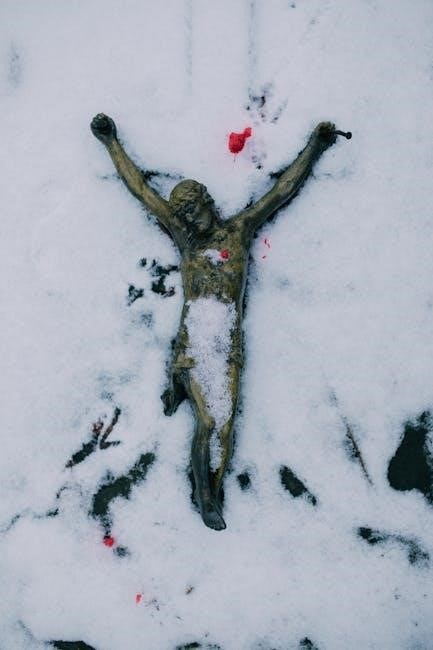
Wole Soyinka’s profound play, frequently studied as a PDF, explores cultural clashes and disrupted cosmic order, blending Yoruba traditions with European theatrical styles.
Overview of the Play’s Context
‘Death and the King’s Horseman’, often accessed as a PDF for scholarly study, is deeply rooted in Yoruba cosmology and ritual practices. The play dramatically portrays a pivotal moment of cultural collision during British colonial rule in Nigeria. It examines themes of duty, honor, and the consequences of disrupting ancient traditions, sparking critical debate about colonialism’s impact;
Wole Soyinka and His Literary Contributions
Wole Soyinka, a Nobel laureate, is celebrated for blending Yoruba traditions with modern dramatic techniques, exemplified in works like ‘Death and the King’s Horseman’ – frequently studied via PDF. His contributions extend beyond drama, encompassing poetry and political essays, consistently challenging colonial legacies and advocating for cultural preservation.

The Core Narrative: Elesin and the Ritual
Elesin, the King’s Horseman, prepares for a sacred passage, a Yoruba ritual detailed in PDF analyses, but colonial intervention disrupts this vital tradition.
Elesin’s Role as the King’s Horseman
Elesin embodies immense responsibility, tasked with accompanying his deceased king into the afterlife – a pivotal Yoruba belief explored in numerous PDF studies. His role isn’t merely ceremonial; it’s cosmically crucial for maintaining balance. Failure, as the play tragically demonstrates, brings communal and spiritual repercussions. The PDF resources highlight Elesin’s initial dignity and acceptance of his fate, before external forces intervene, altering his destined path and initiating the play’s central conflict.
The Significance of the Yoruba Ritual of Passage
The Yoruba ritual, central to the play and detailed in available PDFs, isn’t simply about death; it’s a vital transition ensuring cosmic continuity. Elesin’s self-sacrifice maintains the natural order, enabling the king’s spirit to journey onward. Disruption, as depicted, signifies a profound imbalance, impacting the entire community. PDF analyses emphasize the ritual’s deep roots in Yoruba social semiotics and beliefs, showcasing its cultural importance.

Colonial Intervention and Cultural Clash
The District Officer’s actions, often analyzed in PDF studies, directly impede the Yoruba ritual, sparking a conflict between tradition and imposed colonial modernity.
The District Officer’s Perspective and Actions
Examining PDF analyses reveals the District Officer embodies colonial authority, viewing the ritual as barbaric and unlawful. He intervenes, attempting to ‘save’ Elesin, fundamentally misunderstanding the spiritual significance. This action, driven by a Western worldview, disrupts the delicate cosmic balance and precipitates the play’s tragic outcome, highlighting the clash of ideologies.
Disruption of Tradition and its Consequences
As detailed in PDF studies, the colonial intervention irrevocably fractures Yoruba tradition, leading to communal tragedy. Elesin’s failure, compounded by the District Officer’s actions, disrupts the natural order and cosmic continuity. This disruption isn’t merely individual; it’s a collective loss, impacting the village’s spiritual well-being and future harmony.
Themes Explored in the Play
The PDF reveals central themes of tradition versus modernity, duty, honor, and responsibility, all dramatically portrayed through Elesin’s tragic fate and colonial interference.
Tradition vs. Modernity
As explored in the PDF, the play starkly contrasts Yoruba traditions—ritual, cosmic order, and ancestral respect—with the imposing force of British colonialism and its modernizing influence. This conflict isn’t simply a clash, but a disruption of deeply held beliefs and a questioning of cultural continuity.
The District Officer embodies modernity’s intervention, attempting to impose his worldview upon a society governed by ancient customs, ultimately leading to tragic consequences and a fractured understanding between worlds.
Duty, Honor, and Responsibility
Examined within the PDF’s context, Elesin’s duty to accompany his king into the afterlife is paramount, representing ultimate honor and communal responsibility. His failure isn’t merely personal; it’s a breach of cosmic order, impacting the entire village.
The play interrogates the weight of these obligations and the devastating consequences when individual will falters, challenging notions of heroism and societal expectations.
Dramatic Techniques and Style
The PDF reveals Soyinka’s masterful blend of Yoruba and European theatre, utilizing poetry, chorus, and storytelling to explore complex themes with nuanced artistry.
Blending of Yoruba and European Theatre Traditions
As detailed in the PDF, Soyinka intricately weaves together Yoruba “total-theater” traditions – encompassing dance, ritual, and communal participation – with established European dramatic structures; This fusion isn’t merely stylistic; it’s fundamental to the play’s exploration of cultural collision and the complexities of interpreting tradition through a colonial lens. The resulting form challenges conventional Western theatrical norms, creating a uniquely powerful and resonant dramatic experience.
The Use of Poetry, Chorus, and Storytelling
The PDF reveals Soyinka masterfully employs poetic language, a vibrant chorus, and traditional storytelling techniques to enrich ‘Death and the King’s Horseman.’ These elements, deeply rooted in Yoruba culture, aren’t simply decorative; they actively shape the narrative, provide commentary, and deepen the audience’s understanding of the ritual’s significance and the unfolding tragedy.
Non-Verbal Communication and Plot Progression
The PDF demonstrates how Soyinka utilizes dance and movement—integral to Yoruba ritual—as crucial plot devices, indexing the play’s pace and dramatic tension.
The Role of Dance and Movement
As the PDF reveals, dance isn’t mere spectacle; it’s a core element of Yoruba social semiotics, deeply embedded within ritualistic practices. Soyinka masterfully integrates this tradition, using movement to signify transitions, emotional states, and the progression of the plot.
These non-verbal cues powerfully communicate cultural significance and drive the narrative forward, reflecting the play’s engagement with total-theater traditions.
Symbolism in Ritualistic Performance
The PDF highlights how Soyinka employs rich symbolism throughout the ritualistic performances. Elesin himself functions as an allegorical figure, representing cultural identity and the weight of tradition. Dance, movement, and costume all carry layered meanings,
reflecting disrupted cosmic order and the consequences of colonial intervention, subtly questioning established norms through poetic and theatrical devices.
Critical Interpretations and Analysis
The PDF reveals analyses framing the play as a potent commentary on colonialism’s impact, exploring disrupted rhythms and a communal tragedy stemming from cultural clashes.
The Play as a Commentary on Colonialism
Examining the PDF, scholars consistently interpret Death and the King’s Horseman as a sharp critique of British colonial rule in Nigeria. The District Officer’s intervention isn’t merely a plot point, but symbolizes the imposition of foreign values and a disregard for indigenous beliefs.
This disruption of Yoruba ritual isn’t presented as a simple misunderstanding, but as a violent act that fractures the community’s spiritual and social order, highlighting colonialism’s destructive force.
Communal Tragedy and Disrupted Cosmic Order
Analysis of the PDF reveals the tragedy extends beyond Elesin’s personal failure; it’s a communal loss rooted in a disrupted cosmic balance; The play demonstrates how Elesin’s inability to complete the ritual fractures the connection between the living and the ancestors.
This disruption isn’t simply a cultural clash, but a profound spiritual wound impacting the entire Yoruba community, leading to a sense of collective disorientation and loss.
Allegory and Symbolism
The PDF showcases Elesin as an allegorical figure representing cultural identity, while Soyinka subtly embeds himself within the play’s narrative layers.
Elesin as an Allegorical Figure
Analyzing the PDF reveals Elesin embodies Yoruba tradition and responsibility, his failure symbolizing a broader cultural disruption under colonial pressure. He’s not merely a character, but a representation of a community’s spiritual obligations and the consequences of abandoning ancestral duties.
Soyinka utilizes Elesin’s journey to explore themes of duty, honor, and the delicate balance between life and death, making him a potent allegorical force.
Symbolic Representation of Cultural Identity
Examining the PDF demonstrates how the play powerfully symbolizes Yoruba cultural identity facing colonial intrusion. Rituals, dance, and storytelling aren’t just plot devices, but representations of a rich heritage threatened by external forces. Elesin’s attire and actions embody this identity,
while the District Officer represents a contrasting, disruptive modernity, highlighting the struggle for cultural preservation.
The Tragedy of Elesin’s Failure
The PDF reveals Elesin’s failure to complete the ritual brings village disapproval and signifies a loss of respect, impacting the community’s cosmic balance.
Loss of Respect and Village Disapproval
As the PDF details, Elesin’s inability to fulfill his duty evokes profound disappointment and censure from his community; his failure disrupts the established order. This act diminishes his status, causing widespread disapproval and questioning his honor. The tragedy isn’t solely individual, but a communal loss, fracturing societal harmony and spiritual connection, as explored in critical analyses.
The Impact of Individual Failure on the Community
The PDF reveals how Elesin’s lapse isn’t isolated; it triggers a communal tragedy, disrupting natural rhythms and cosmic continuity. His failure to complete the ritual impacts the entire village, fracturing their spiritual balance and collective identity. Critical interpretations emphasize this interconnectedness, highlighting the devastating consequences of a single man’s broken vow.
Historical and Cultural Background
The ‘Death and the King’s Horseman’ PDF contextualizes the play within Yoruba social semiotics, beliefs, and the realities of British colonial rule in Nigeria.
Yoruba Social Semiotics and Beliefs
Analyzing the ‘Death and the King’s Horseman’ PDF reveals the centrality of ritual and dance within Yoruba culture; these aren’t mere performance, but vital communication. The play deeply engages with total-theater traditions, reflecting beliefs about cosmic continuity and the importance of honoring ancestral passage. Disruption of these rhythms leads to communal tragedy, highlighting the interconnectedness of life, death, and societal harmony within Yoruba cosmology.
The Context of British Colonial Rule in Nigeria
Examining the ‘Death and the King’s Horseman’ PDF reveals the play’s setting amidst British colonial rule in Nigeria, where traditional practices clashed with imposed modernity. The District Officer’s intervention embodies this conflict, disrupting a sacred Yoruba ritual. Soyinka critiques colonialism’s impact on cultural identity and the tragic consequences of suppressing indigenous beliefs and practices, as seen through the play’s narrative.
Literary References and Further Reading
Exploring the ‘Death and the King’s Horseman’ PDF, scholarly articles on ResearchGate and related works by Soyinka offer deeper critical analysis and context.
Key Scholarly Articles on the Play
Numerous academic papers dissecting ‘Death and the King’s Horseman’ are accessible online, often as downloadable PDFs. ResearchGate hosts vital discussions concerning tradition versus modernity, and the colonial officer’s impact. Studies analyze Soyinka’s blending of Yoruba and European theatre, focusing on ritualistic performance and symbolism. Further exploration reveals analyses of disrupted cosmic order and the play’s allegorical layers, offering diverse critical perspectives.
Related Works by Wole Soyinka
Soyinka’s extensive body of work complements ‘Death and the King’s Horseman’. Notable titles include plays exploring similar themes of cultural identity and colonialism; His poetry and prose, often available as PDFs, demonstrate a consistent engagement with Yoruba traditions and political commentary. Examining these related works provides a broader understanding of Soyinka’s artistic vision and literary contributions.

The Play’s Reception and Critical Acclaim
‘Death and the King’s Horseman’, often accessed as a PDF, garnered distinguished critical attention and is recognized as a major work of modern drama.
Distinguished Critical Attention Received
Soyinka’s play, widely available as a PDF, has sparked extensive scholarly debate, particularly regarding its commentary on colonialism and cultural disruption. ResearchGate hosts numerous analyses, examining the blend of Yoruba and European theatrical traditions. Critics explore the allegory, symbolism, and the tragedy stemming from Elesin’s failure, noting its unique contribution to modern ritual drama and its exploration of life and death.
Recognition as a Major Work of Modern Drama
‘Death and the King’s Horseman,’ often accessed as a PDF, is celebrated as a pivotal work in modern drama. Its innovative structure, blending Yoruba ritual with Western theatrical forms, garners consistent praise. Scholars acknowledge its profound exploration of themes like tradition versus modernity, duty, and the impact of colonial intervention, solidifying its lasting literary significance.

Analyzing Transitions in the Play
Transitions within the play, often examined in PDF analyses, highlight ritualistic change and explore the delicate balance between life, death, and Yoruba cosmology.
Tropes of Transition and Ritualistic Change
Examining the play, often through PDF resources, reveals transitions marked by dance and symbolic acts central to Yoruba social semiotics. These shifts aren’t merely plot devices; they embody profound cultural and spiritual changes. The ritual’s disruption, a key focus in critical analyses, signifies a fractured cosmic order, impacting both individual fates and communal harmony.
The Play’s Exploration of Life and Death
Through detailed PDF studies, the play’s engagement with life and death emerges as a central theme, deeply rooted in Yoruba beliefs about the afterlife and ancestral continuity. Elesin’s failure to complete the ritual disrupts this natural cycle, creating a tragic imbalance. Soyinka subtly questions these concepts, blending tradition and modernity.

The Play as Ritual Drama
‘Death and the King’s Horseman,’ as explored in PDF analyses, masterfully blends Yoruba total-theater traditions with European dramatic structures, creating a unique ritualistic experience.
Total-Theater Traditions of the Yoruba Tribe
Soyinka’s play deeply engages with the Yoruba’s holistic “total-theater” approach, evident in PDF studies of the work. This tradition integrates dance, music, poetry, and storytelling—all crucial elements within the ritualistic performance.
These traditions aren’t merely aesthetic; they’re integral to conveying meaning and maintaining cosmic balance, powerfully showcased in Death and the King’s Horseman’s structure.
The Play’s Engagement with Ritualistic Practices
Death and the King’s Horseman, often analyzed as a PDF, meticulously portrays Yoruba ritualistic practices surrounding death and transition. The play isn’t simply about ritual; it is a ritualistic performance, employing poetry, dance, and symbolic action.
Scholarly analysis reveals Soyinka’s intent to recreate the immersive experience of Yoruba ceremonies, highlighting their spiritual and communal significance.